Quantum Ready Mobile Apps The 2026 Developer Blueprint

The Quantum Shift Is Already Underway
Your encryption is already broken. Not today, maybe not tomorrow, but someone’s recording your most sensitive, currently-encrypted mobile traffic right now to decrypt it later when fault-tolerant quantum computers arrive. This is the "harvest now, decrypt later" attack—a chilling reality that shifted quantum computing from science fiction to an immediate security emergency.
The global quantum computing market, propelled by major breakthroughs in late 2024 and early 2025, has accelerated beyond initial forecasts. By 2026, the discussion is no longer "if" but "when" current security protocols fail. Building quantum-ready mobile apps now means embracing a Hybrid Defense/Offense Strategy:
Defense: Protecting against quantum threats using post-quantum cryptography (PQC).
Offense: Leveraging cloud-based Quantum-as-a-Service (QaaS) for next-generation app optimization and performance.
Most development teams focus on one, ignore the other, and risk building apps that are either secure but inefficient, or fast but fundamentally vulnerable. This blueprint provides the complete 2026 action plan to implement both.
The Non-Negotiable Defense: Protecting Mobile Data with PQC (The Security Shift)
The security of every mobile app you have built—from the simplest payment gateway to the most complex healthcare portal—relies on public-key cryptography standards like RSA and Elliptic Curve Cryptography (ECC). These standards crumble completely under quantum algorithms like Shor’s algorithm, which can crack them in hours instead of centuries.
Understanding the ‘Harvest Now, Decrypt Later’ Reality
The risk is not waiting for a universal quantum computer to switch on; the risk is the data being exfiltrated and stored today. For data with a long shelf life—medical records, financial transaction histories, government clearances, intellectual property—a threat actor can simply harvest the encrypted packets and wait until their quantum computing capability matures in the next 3-5 years.
This stopped being a theoretical future problem when major industry bodies began mandating change. Quantum computing companies, having surpassed $1 billion in revenue in 2025, continue to accelerate capability faster than most security teams can respond.
Actionable Takeaway 1: Audit every encryption method in your current mobile apps. List which ones use RSA or ECC for key exchange and digital signatures. These need quantum-safe replacements before 2027.
The 2026 Regulatory Landscape: Why Waiting Is Not an Option
Regulatory pressure, particularly in highly sensitive sectors, is forcing the transition now. The European Central Bank's €250 million program for quantum-safe measures is a clear signal: if your app handles any EU user data, you will face explicit quantum-safe requirements soon.
In the United States, the National Institute of Standards and Technology (NIST) has provided the authoritative timeline, solidifying the requirements for any organization that deals with the federal government or critical infrastructure.
Actionable Takeaway 2: Contact your cloud provider today. Ask specifically about their quantum-safe encryption roadmap for mobile key exchange and data-at-rest. If they lack concrete plans for 2026, switching providers is a necessary step.
Implementing NIST’s PQC Trio: CRYSTALS-KYBER in Practice
NIST released the three finalized post-quantum encryption standards in August 2024: FIPS 203, FIPS 204, and FIPS 205. These standards specify the algorithms that define the future of secure communication.
FIPS 203 (Key Establishment): Defines CRYSTALS-KYBER (Lattice-based cryptography). This is your primary replacement for ECC/RSA key exchange.
FIPS 204 (Digital Signatures): Defines CRYSTALS-Dilithium. This replaces current digital signature schemes.
FIPS 205 (Digital Signatures): Defines SPHINCS+ (Hash-based cryptography), a stateful signature option.
Regarding the urgency of implementation, Dr. Lily Chen, one of NIST's leading cryptographers, stated in their standardization announcement that "organizations should begin transitioning to these standards immediately." Waiting for the quantum security crisis to become visible is waiting too long.
Actionable Takeaway 3: Implement CRYSTALS-KYBER for key exchange in your security-critical mobile applications within the next 90 days. Libraries are available for major platforms and languages, including open-source PQC implementations for Swift, Kotlin, and React Native bridge modules.
The Quantum Cost of Doing Nothing
Migration to PQC is an investment, but the cost of inaction is exponentially higher.
Factor | Cost of PQC Migration (Investment) | Cost of Inaction (Risk/Liability) |
Effort | 5-10 substantive updates to crypto layers, dependency auditing. | Complete overhaul/rebuild under duress post-breach. |
Financial | Estimated $15,000 - $75,000 for a medium-sized app audit and migration. | Regulatory fines (GDPR/HIPAA/etc.), class-action lawsuits, estimated $4.5 million average cost of a breach (2025 estimate, higher for data over 5 years old). |
Timeline | 6-12 months for staged migration starting now (2026). | Immediate, forced shutdown and chaotic emergency migration. |
Reputation | Increased trust, competitive differentiator ("Quantum-Safe"). | Catastrophic loss of customer trust and brand damage. |
Actionable Takeaway 4: Create a data lifespan map. Any sensitive user data (credentials, financial, health) that must be protected longer than two years needs quantum-safe encryption immediately.
The Proactive Offense: Leveraging Quantum Optimization for Mobile (The Performance Edge)
Defense is only half the story. The quantum age also offers massive opportunities for application performance and efficiency that classical computers simply cannot match. Quantum algorithms excel at solving NP-hard optimization problems that underpin modern logistics, machine learning, and scheduling.
Quantum-as-a-Service: Bridging Mobile to the Qubit
You don't need to buy a $10 million quantum computer. Leading providers—IBM Quantum, Microsoft Azure Quantum, and Amazon Braket—offer Quantum-as-a-Service (QaaS), allowing mobile developers to access powerful quantum hardware and simulators via simple, well-documented REST API calls. This is the game-changer for 2026.
The QAOA Advantage: Solving NP-Hard Problems in Your App
The Quantum Approximate Optimization Algorithm (QAOA) is purpose-built to tackle combinatorial problems—the kind where you’re checking millions of combinations to find the single best one. This includes complex tasks like delivery route optimization, network traffic allocation, and resource scheduling.
Consider the real-world case of a logistics application built by a Mobile App Development North Carolina company in late 2025. Their classical algorithm took an estimated 45 minutes to optimize delivery routes for 200 stops across a major metropolitan area. By integrating IBM's quantum cloud service using QAOA, they achieved a significant competitive edge:
Optimization Time Dropped: From 45 minutes to 8 minutes.
Fuel/Resource Savings: Saved an average of 12% on monthly fuel and labor costs due to superior route efficiency.
The integration cost them just a few weeks of development time and a few hundred dollars per month in cloud quantum access.
Actionable Takeaway 5: Identify your app’s three most computationally expensive optimization tasks. If they involve exploring a massive solution space (e.g., maximizing profit, minimizing distance), they are prime quantum candidates.
Accelerating Machine Learning with Quantum
Quantum Machine Learning (QML) is poised to revolutionize personalization and prediction engines. Algorithms like the Variational Quantum Eigensolver (VQE) are designed to maximize the potential of near-term, noisy quantum hardware.
Mobile apps that rely on complex, daily retraining of machine learning models—such as dynamic personalization engines that analyze hundreds of user behavior variables—will see massive gains. While classical ML might struggle to analyze more than 50 factors efficiently, QML can process 500+ variables in comparable timeframes, leading to 3–10x speed improvements in training financial prediction or medical diagnostic models.
Actionable Takeaway 6: If your app uses large TensorFlow or PyTorch models requiring frequent retraining for features like recommendations or fraud detection, explore quantum ML libraries like PennyLane or Qiskit Machine Learning.
The Hybrid Architecture Blueprint
The key to success is understanding that quantum is a co-processor, not a complete replacement. The Houston logistics team found quantum worked brilliantly for complex pre-computation (optimal routes overnight) but added latency to simple real-time tasks (dynamic adjustments).
The ultimate 2026 application architecture is hybrid:
Quantum: Use for complex batch processing, long-term optimization, and heavy ML model training.
Classical: Handle all real-time user interactions, simple calculations, and dynamic minor adjustments.
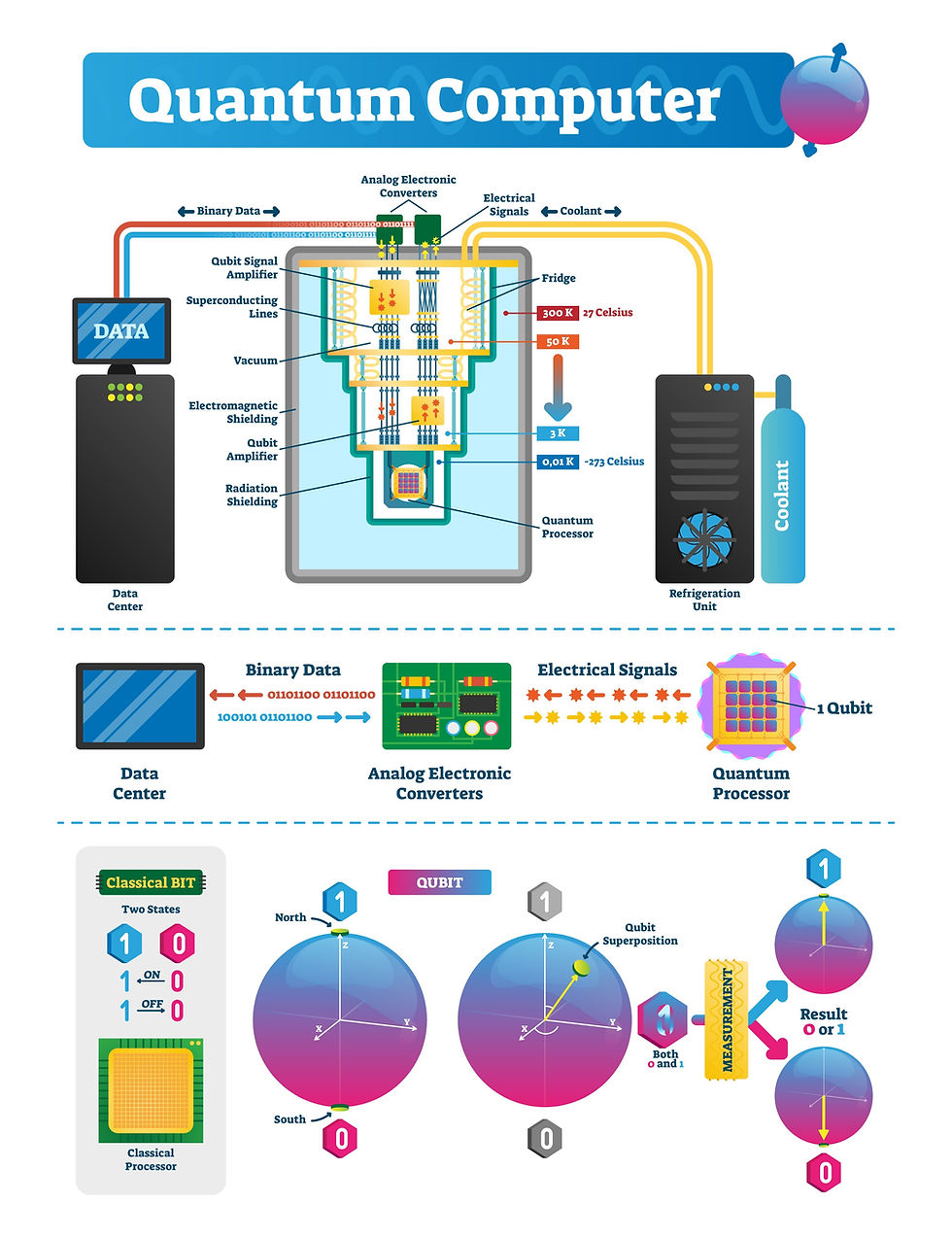
Actionable Takeaway 7: Use quantum for complex, asynchronous planning. Keep robust classical algorithms for real-time user-facing features and simple calculations where speed is paramount.
A 2026 Developer Checklist: From Zero to Quantum-Ready
Building a quantum-ready app is a structured, three-phase journey.
Phase I: The Crypto-Inventory & Data Lifespan Map
Before writing a single line of new code, you must know what you have and what you need to protect.
Map All Endpoints: Document every API call, data transmission channel, and stored credential that uses public-key cryptography.
Assess Sensitivity: Classify data based on its sensitivity (e.g., PII, PHI, financial).
Determine Lifespan: How long must this data remain confidential? If the answer is forever (or longer than five years), it is immediately vulnerable to harvest-now attacks.
Actionable Takeaway 8: Implement hybrid encryption using both ECDH (classical) and CRYSTALS-KYBER (PQC) for key exchange. Double protection for minimal performance cost ensures protection against both classical and potential PQC vulnerabilities.
Phase II: Implementing Hybrid Cryptography
The transition period requires a belt-and-suspenders approach. Hybrid cryptography uses both classical and quantum-safe algorithms together in parallel. If the classical method is broken by a quantum attack, the quantum-safe algorithm still protects the data.
Performance hits are minimal and manageable. CRYSTALS-KYBER key generation takes microseconds. If your key exchange happens less than 100 times per second (true for most mobile applications), the quantum-safe replacements add negligible delay.
Actionable Takeaway 9: Benchmark your current encryption operations. If key exchange and signature operations are not occurring thousands of times per second, the performance overhead of hybrid PQC is entirely acceptable.
Phase III: Benchmarking for Quantum ROI
Exploiting the offensive side of quantum requires testing.
Select a Problem: Choose one complex optimization problem (e.g., multi-criteria scheduling, logistics) from your app.
Access QaaS: Create free accounts on platforms like IBM Quantum or Azure Quantum.
Benchmark: Test the problem solution time and efficiency using your current classical method versus a quantum simulator or free-tier quantum hardware via their Python or Q# libraries.
This experimentation phase is cheap and low-risk.
Actionable Takeaway 10: Build a proof-of-concept using quantum simulators first. Debug the problem definition and quantum algorithm locally before transitioning to real quantum hardware and burning compute credits.
Beyond Encryption: Quantum Random Numbers
True randomness is vital for cryptographic session keys, salts, and initialization vectors. Classical computers generate pseudorandom numbers. Quantum Random Number Generation (QRNG) services—available via API from companies like ANU QRNG—use quantum uncertainty principles to create genuinely unpredictable, true random numbers.
Actionable Takeaway 11: Replace your random number generation for security-critical operations with an accredited QRNG service for an immediate and significant security boost.
Conclusion: The Baseline for 2028
Quantum-ready mobile app development is not an ambitious goal for the distant future; it is the baseline for apps that will still be relevant and secure in 2028. The EU expects member countries to begin quantum-safe migration by the end of 2026, and the industry is right behind it.
The question of your app's quantum future depends on the actions you take this quarter. Start with defense: Implement NIST PQC standards (KYBER/Dilithium) to mitigate the inevitable security threat. Then, move to offense: Explore QaaS optimization for your app’s heaviest computational tasks to gain a valuable performance edge.
Waiting for quantum computers to "arrive" misses the point—they are already here, accessible via cloud APIs, already solving optimisation problems classical computers cannot, and already threatening your most critical data.
5 Most Searched FAQs on AI and SERP (2026 Focus)
1. How is Generative AI fundamentally changing the SERP in 2026?
Generative AI is transforming the SERP from a "10 blue links" list to a "Zero-Click Answer Engine." In 2026, you primarily see AI-driven features like:
AI Overviews (or SGE): Prominent, instantly generated summaries that answer the user's query at the top of the SERP, often synthesizing information from multiple sources. This reduces organic click-through rates (CTRs) for informational queries.
Conversational Search: The ability to refine search queries using natural language follow-up questions directly within the search interface, creating a dynamic, multi-turn experience.
Structured Data Integration: AI is better at recognizing and extracting information from structured data (like schema markup) to feed its generative summaries, increasing the importance of highly organized content.
The primary change is a shift from ranking web pages to ranking and extracting relevant information chunks.
2. How can my content rank and gain visibility when AI Overviews take the top spot?
To gain visibility in an AI-dominated SERP, content must be engineered to be the source material for the AI:
Prioritize E-E-A-T (Experience, Expertise, Authoritativeness, Trustworthiness): AI models place a high value on content that demonstrates genuine first-hand Experience and deep Expertise. The more unique, proprietary data, case studies, and real-world examples you include, the more likely the AI is to cite you as a trusted source.
Focus on Specificity and Depth: Generative AI often summarizes "table stakes" information. Your content must go 30% deeper than competitors, answering niche, complex, or multi-faceted questions that the AI cannot synthesize purely from existing shallow content.
Optimize for Extraction: Write content in a format the AI can easily digest: use numbered lists, bullet points, clear H2/H3 headings, and concise, direct answers immediately following questions. This increases the chance of your content being pulled into the AI Overview snippet.
3. What is the biggest threat to content creators from AI in 2026?
The biggest threat is the "AI Content Treadmill"—the mass creation of generic, shallow, and commoditized content that uses AI tools without adding any original value or expertise.
This massive influx of similar, easily-generated content forces search engines to apply aggressive "Helpful Content System" penalties, demoting sites that prioritize quantity over quality.
The risk isn't AI writing content; the risk is AI-aided plagiarism and mediocrity. Content that doesn't showcase human experience or proprietary insights will be instantly devalued, regardless of its SEO structure. The focus has entirely shifted to demonstrable originality.
4. Are keywords and search volume still relevant in an AI-driven search environment?
Yes, but the strategy is different:
Keywords: Traditional short-tail keywords (e.g., "SEO tips") are still the starting point for user intent, but content must focus on addressing the entire long-tail cluster around that intent (e.g., "How to measure SEO tips ROI for a small B2B SaaS company").
Search Volume: Volume is less important than Commercial Intent. A query with low volume but high commercial intent (e.g., "best project management software comparison for 2026") is exponentially more valuable than a high-volume query with low intent (e.g., "what is a project").
Focus on the Job-to-Be-Done (JTBD): Content strategy must align with the user's specific Job-to-Be-Done (e.g., When I need to choose new software, I want to compare features quickly, so I can validate my purchase decision). Keywords are simply the language the user employs to express that Job.
5. Will AI replace SEO and traditional content writing roles?
No, but AI will radically transform them:
SEO is becoming AI-Prompt Engineering: SEO professionals are evolving into strategists who understand how to structure content and information for optimal AI consumption and citation, rather than just technical ranking factors.
Content Writers are becoming Subject Matter Experts (SMEs) and Editors: The role shifts from generating first drafts to injecting proprietary experience, original research, and unique perspectives—the elements AI cannot replicate. The future writer is an editor and expert who uses AI as a research and drafting assistant, not a replacement.
The core value proposition for both roles is moving away from execution and toward strategic, human-led differentiation.


Attending the Global Skills Meet means stepping into a vibrant space focused on growth and innovation. The event showcases diverse voices and perspectives from various industries. Each participant benefits from curated content designed to address current skill trends. Networking opportunities help bridge learners with mentors and like-minded professionals. Grow and connect with the community at Global Skills Meet.